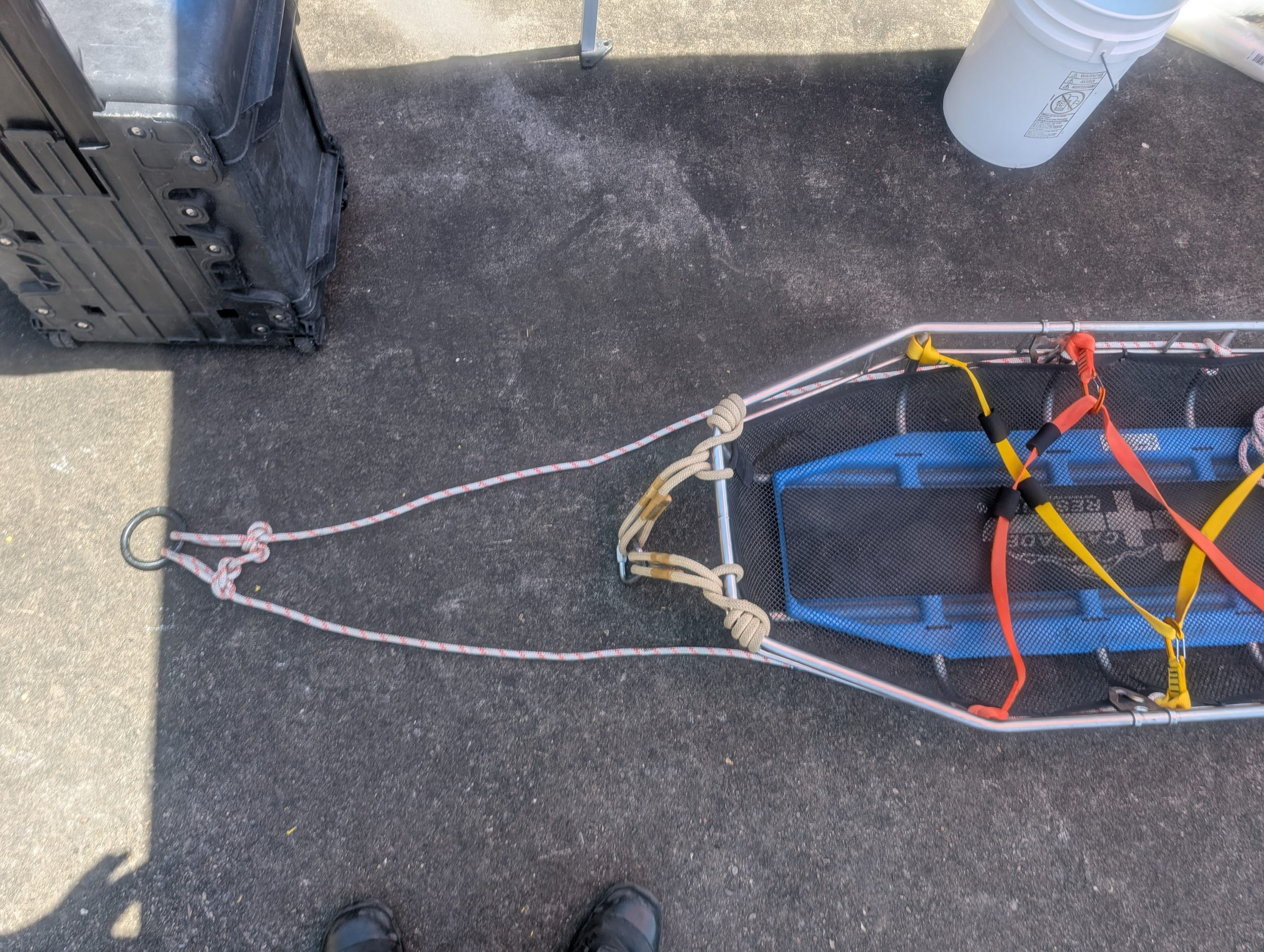
TL;DR: attach the lower bridle above the center of gravity, with generous spacing from the upper bridle.
Better photos will be added eventually, but for now:
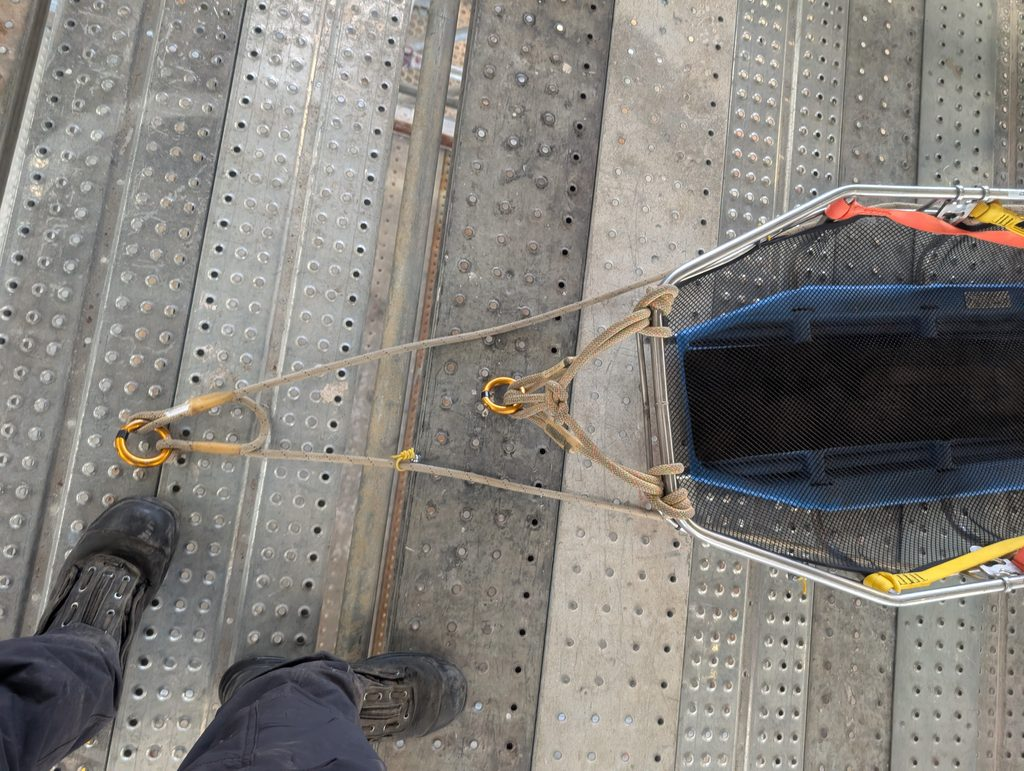
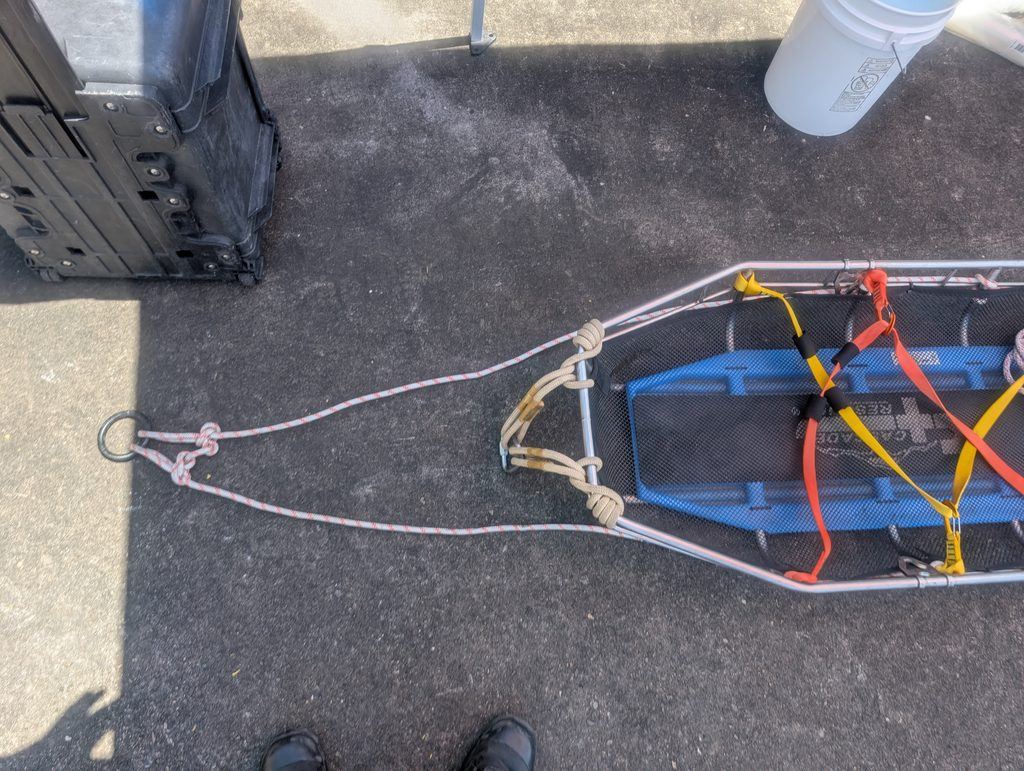
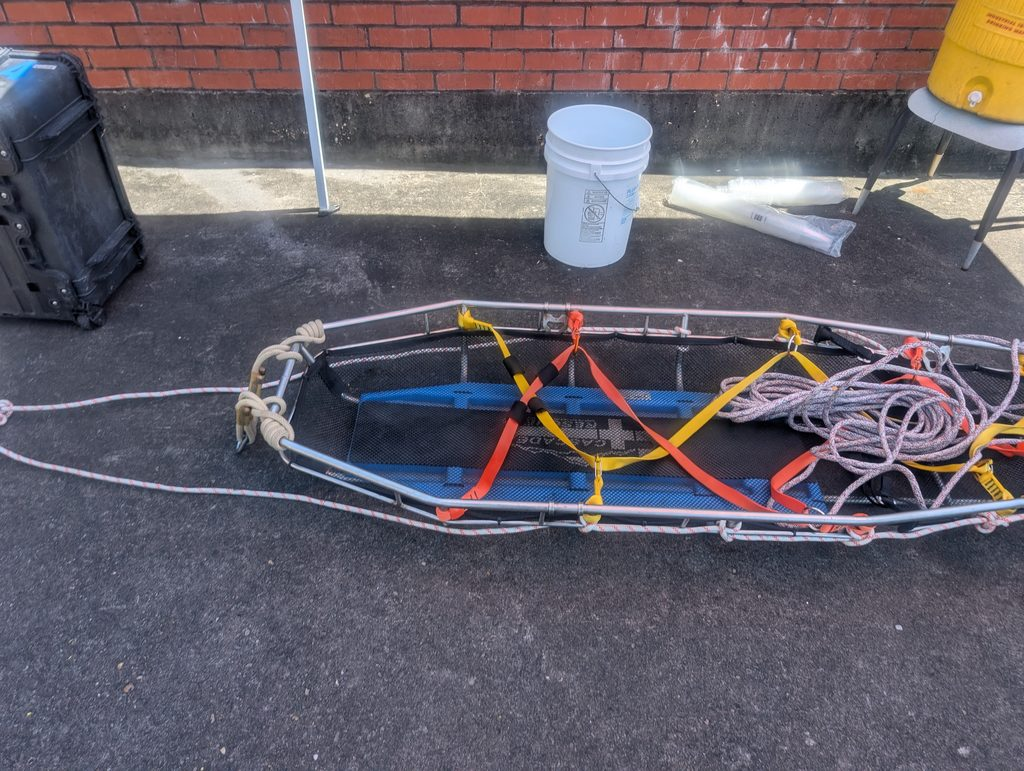
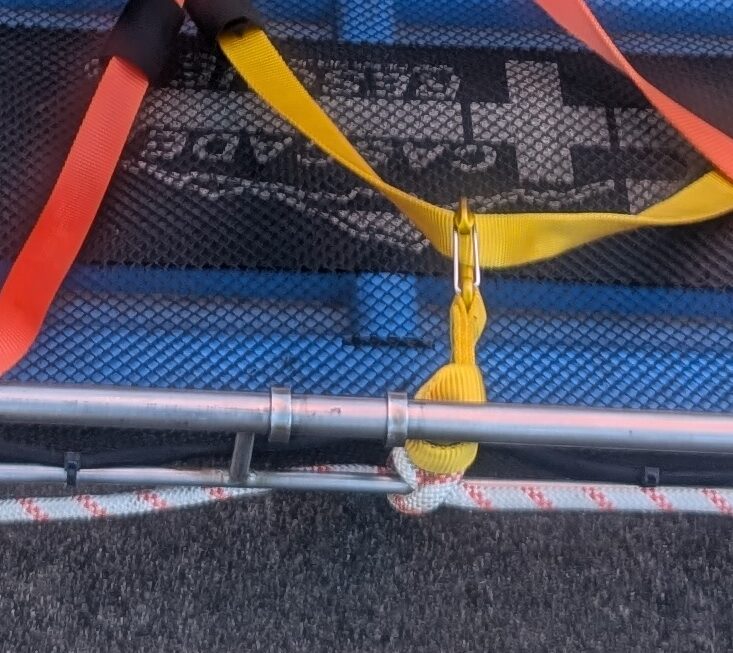
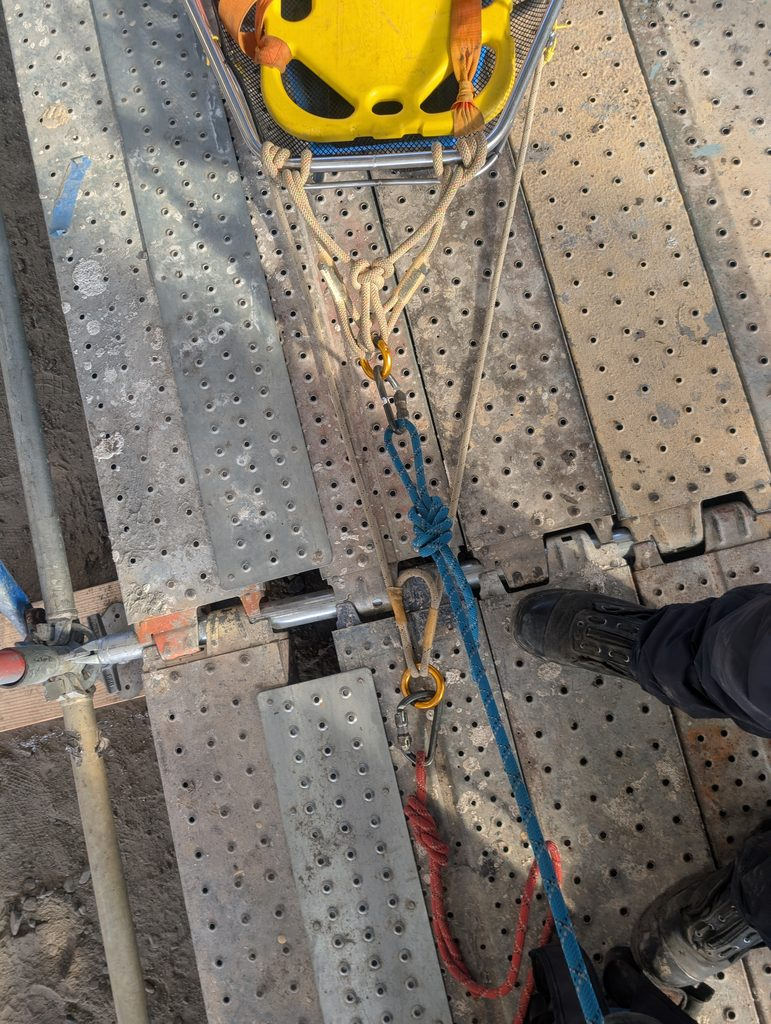
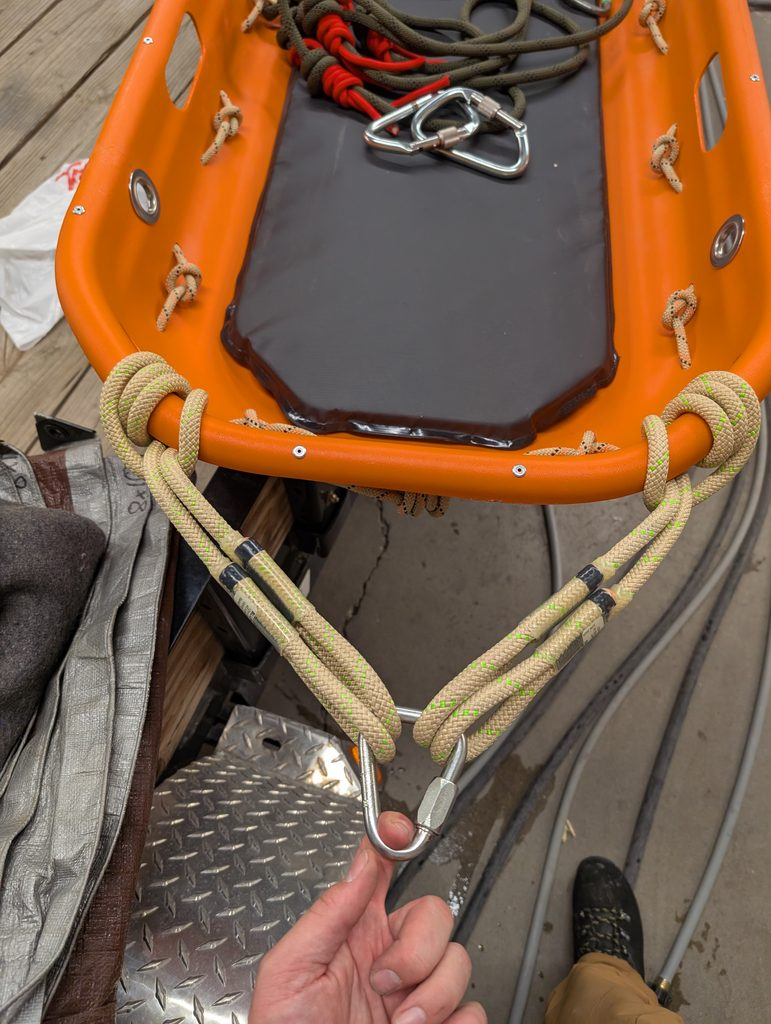
The Pike and Pivot method of transitioning a vertically oriented litter over a low edge relies on two independent bridles, one high and one low. Pike and Pivot works best with a TTRS/Dual Main system.
I’ve seen the lower bridle attached well below the patient’s center of gravity. Because there is the potential for the litter to flip, the lower bridle is secured to the top rail of the litter by carabiners near the shoulders. When the litter approaches the edge, the bridle is slacked and an edge attendant can remove the bridle from the carabiners. Easy in theory, not so smooth in practice.
By moving this attachment above the patient’s center of gravity, these carabiners become unnecessary. Especially with TTRS, the package can still easily pivot over the edge. Moving the attachment higher also reduces the free fall potential during the edge transition.
I like the clove hitch attachment over carabiners, because there’s no hardware to bind, twist, or cross load.
I’ve experimented with different spacing between the upper and lower bridles. The minimum seems to be room for a carabiner and poorly dressed Figure 8 knot. Using what seemed like an excessively long lower bridle didn’t seem to cause any problems, and allowed for some error and delay in communication, and longer/irregular edges.
The idea is, haul on both lines until the first knot (tied in the the rope attached to the lower bridle) nears the edge. Haul on the upper bridle only, until all knots, hardware, and sewn terminations are over the edge. Then, haul on the lower bridle only, maintaining light tension on the upper. When the lower bridle litter attachment point is at or near the edge, haul on the upper bridle only, pivot the litter, and maintain tension on both lines as you move the patient away from the edge.
More spacing allows for a sloppy knot, or a haul team not stopping and starting exactly when they’re supposed to. In industry, a lot of edges are manufactured 2 inch tubing or angle iron, so they can be cleared in a short amount of space. Sometimes the edge is a beam or pipe, which takes more space. In wilderness, edges tend to be more of a rollover.
There seem to be two downsides to a longer lower bridle.
First, it’s more material. If the lower bridle isn’t being used, it’s more loose stuff hanging in the way, snagging, causing problems. We tried using light duty zip ties to secure the lower bridle. They break away during the edge transition, it’s very very slick. Downside is you replace a lot of zipties. I’m also playing with using fishing net magnets to keep the bridle tidy, easily release during the edge transition, and easily reset.
The other downside is the longer bridle eats some haul field. In confined space and cave rescue especially, haul field can be critical.
I don’t see this being a huge issue. With the upper bridle, the patient is still very safely connected, and even if the lower bridle is slack, at that point the patient should be over the edge.
We also accept a free fall potential during the “Pike” of Pike and Pivot.
Given the utility of the longer lower bridle, I think it’s worth the tradeoff, which will only manifest in cases where your progress capture device is less than eight feet from the edge.
What about winches?
Harken winches and the AWAH Z3 are becoming increasingly common. TTRS with winches doesn’t really make sense, and I’d be concerned about having two winches attached to a stuck litter. Forces could get out of hand fast.
I haven’t tried it yet, but I think the best way to do Pike and Pivot with a winch would be to have the winch attached to the lower bridle. On the upper, attach a Clutch, Maestro, I’D, etc. Because these devices also serve as progress capture devices, I think 1-2 rescuers could directly haul on the belay line and pivot the litter. Further experimentation is required.
Leave a Reply